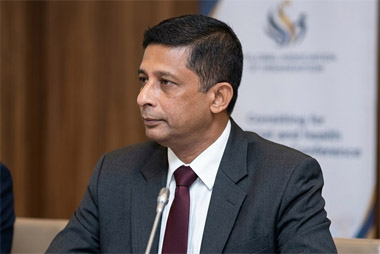
The fate of former State Intelligence Service (SIS) chief Suresh Sallay now rests firmly in the hands of Sri Lanka's judiciary, according to Director of Communications Fr. Cyril Gamini Fernando. Speaking to media on 8 June 2026, Fr. Gamini made clear that the government would respect the independence of the courts in determining the outcome of Sallay's case, which has drawn significant public attention in recent months.
The statement comes amid growing speculation about the former intelligence chief's legal status and signals the administration's position on a matter that has sparked considerable debate within Sri Lanka's political and security circles. Fr. Cyril Gamini's remarks underscore the separation of powers between the executive and judicial branches, a principle that remains central to Sri Lanka's democratic framework.
Government Respects Judicial Independence in Sallay Case
Fr. Cyril Gamini Fernando, who serves as Director of Communications for the government, emphasised that decisions regarding Suresh Sallay would be made through proper legal channels. The judiciary will decide on Sallay's future, he confirmed, reflecting the administration's commitment to allowing the courts to operate without political interference.
Sallay, who previously held the influential position of Director General of the State Intelligence Service, has been a figure of considerable interest since questions emerged about his tenure and activities during his time in office. The State Intelligence Service plays a vital role in Sri Lanka's national security apparatus, making any proceedings involving its former leadership a matter of national importance.
Legal Proceedings and Public Interest
The case has attracted widespread attention from both media and civil society organisations who view it as a test of institutional accountability. Legal experts note that allowing the judiciary to proceed without executive pressure demonstrates a healthy respect for the rule of law, particularly in cases involving senior security officials.
While Fr. Gamini did not elaborate on specific charges or the timeline for judicial proceedings, his statement indicates that the government will not seek to influence the outcome through political channels. This approach contrasts with previous instances in Sri Lankan history when the executive branch was accused of interfering in sensitive legal matters involving high-ranking officials.
Separation of Powers in Focus
The Director of Communications' remarks highlight the constitutional principle of separation of powers, which allocates distinct responsibilities to the executive, legislative, and judicial branches of government. By deferring to the judiciary, the current administration appears determined to maintain this balance, particularly in matters involving former security personnel.
Legal analysts have welcomed the government's position, noting that judicial independence remains essential for maintaining public confidence in Sri Lanka's democratic institutions. The courts have historically faced scrutiny over their handling of politically sensitive cases, making transparent proceedings in the Sallay matter all the more important.
State Intelligence Service and Accountability
The State Intelligence Service has long operated in the shadows of Sri Lankan governance, with limited public oversight of its activities. Cases involving former SIS officials therefore carry particular significance, as they offer rare opportunities for public accountability within the intelligence community.
Suresh Sallay's tenure as SIS chief coincided with a period of significant political transition in Sri Lanka, making questions about his conduct during that time especially relevant. The judiciary's handling of his case could set important precedents for how the country addresses allegations against senior intelligence officials.
Fr. Cyril Gamini's statement comes at a time when Sri Lanka continues to strengthen its democratic institutions following years of political upheaval. The government's commitment to allowing the judiciary to function independently in high-profile cases represents an important signal to both domestic and international observers.
What Happens Next
While specific details about the judicial proceedings remain scarce, legal observers expect the courts to follow established procedures in examining any matters related to Sallay's conduct. The timeline for these proceedings has not been publicly disclosed, though the Director of Communications' statement suggests the process is already underway.
As Sri Lanka continues its journey toward greater transparency and accountability in governance, cases like this one serve as important indicators of institutional health. The government's decision to defer to judicial authority rather than attempting to direct outcomes reinforces the principle that no official, regardless of rank or former position, stands above the law.
The coming weeks and months will likely bring greater clarity as the judiciary examines the evidence and arguments before it. For now, Fr. Cyril Gamini's message remains clear: the courts will decide, and the government will respect their decision.
Source: Daily Mirror
No comments yet. Be the first to share your thoughts!