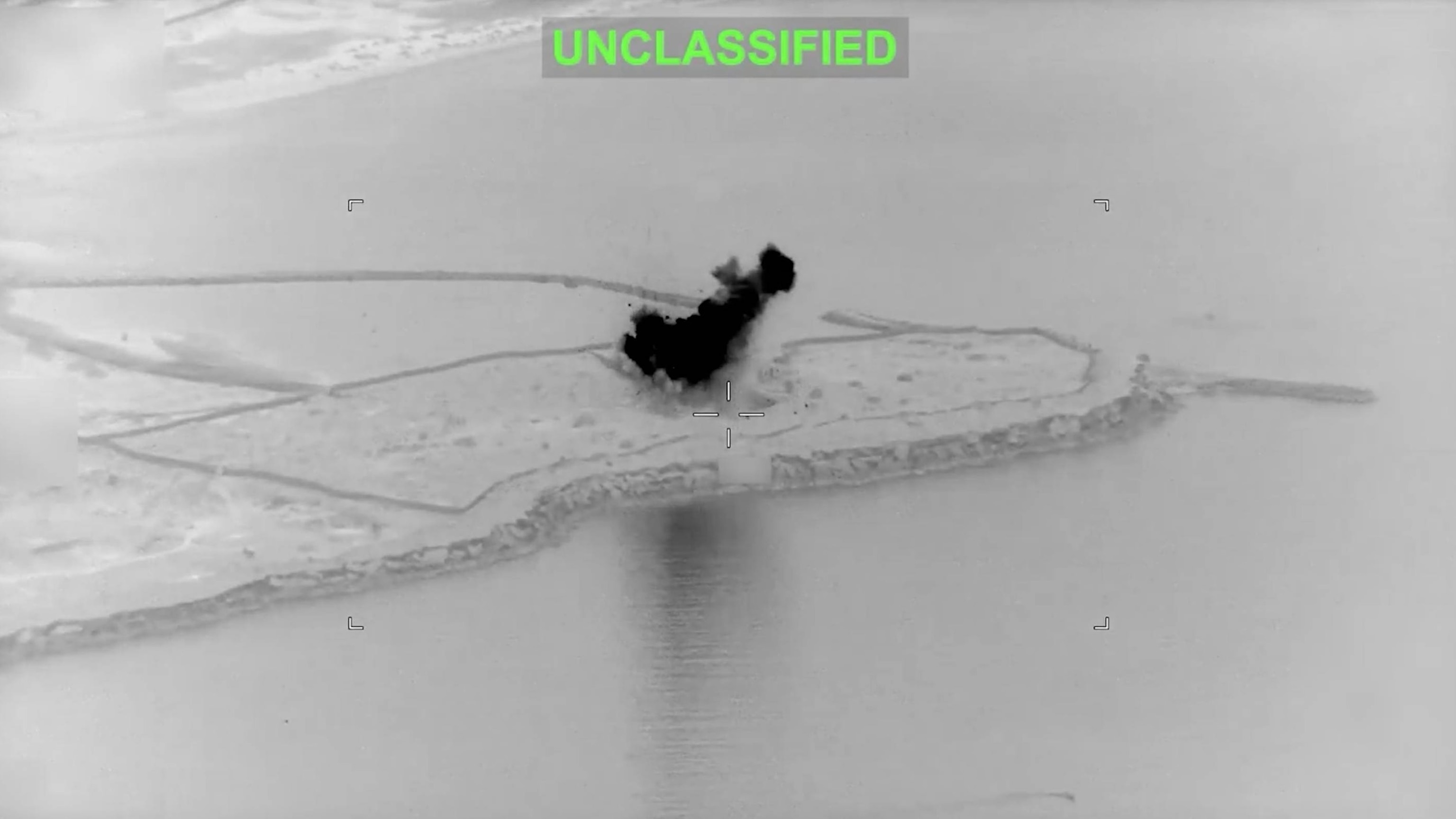
United States military forces struck Iranian coastal radar sites on Saturday after intercepting and destroying drones launched by Iran toward the strategically vital Strait of Hormuz, marking a sharp escalation in tensions between Washington and Tehran that could derail ongoing diplomatic efforts to stabilise the region.
The US Central Command confirmed the retaliatory strikes in a statement released early Saturday, describing the action as a defensive measure to protect international shipping lanes and American interests in the Persian Gulf. According to military officials, Iranian forces had launched multiple unmanned aerial vehicles from positions along the southern Iranian coastline shortly before midnight local time.
"US forces detected and successfully intercepted hostile drones originating from Iranian territory," the statement read. "In response to this unprovoked aggression and to degrade Iran's ability to threaten freedom of navigation, precision strikes were conducted against radar installations used to coordinate such attacks."
Strategic Importance of the Strait of Hormuz
The Strait of Hormuz serves as a critical chokepoint for global energy supplies, with approximately one-fifth of the world's petroleum passing through the narrow waterway daily. Any military confrontation in this area carries significant implications for international oil markets and broader economic stability.
Maritime security analysts have expressed concern that Saturday's incident represents a dangerous pattern of action and counteraction that could spiral beyond either side's control. Dr Ahmed Al-Rashid, a Gulf security specialist at the Institute for Strategic Studies, noted that previous drone incidents in the region have led to weeks of heightened military posturing.
"What we're witnessing is a calibrated but perilous game of brinkmanship," Al-Rashid said in a telephone interview. "Neither Washington nor Tehran appears willing to back down, yet neither seems to want full-scale confrontation."
Impact on Diplomatic Efforts
The military exchange comes at a particularly sensitive moment for regional diplomacy. Sources familiar with ongoing negotiations indicated that back-channel talks aimed at de-escalating broader US-Iran tensions had shown tentative progress in recent weeks, with both sides exploring potential frameworks for reducing military friction points.
Saturday's events threaten to undermine those fragile discussions. European diplomatic sources, speaking on condition of anonymity, expressed frustration that military actions on both sides continue to complicate peace-building efforts.
The Iranian government has not yet issued an official response to the US strikes, though state media reported that the country's Supreme National Security Council convened an emergency session on Saturday afternoon. Preliminary reports from Tehran suggest Iranian officials are framing the drone launches as a legitimate response to what they characterise as American provocations in their territorial waters.
Regional Reactions and Concerns
Neighbouring Gulf states, which maintain complex relationships with both Washington and Tehran, have largely remained silent on the latest incident. However, shipping insurers have already begun adjusting risk assessments for vessels transiting the Strait of Hormuz, with premium increases expected in the coming days.
The International Institute for Strategic Studies has warned that repeated military incidents in the Persian Gulf create conditions for miscalculation that could inadvertently trigger wider conflict. Their latest assessment, published last month, highlighted the proliferation of drone technology as a particular flashpoint in US-Iran relations.
Oil markets responded nervously to news of the strikes, with Brent crude futures rising 2.3 percent in early Asian trading on Monday. Energy analysts predict continued volatility as traders assess whether the incident represents an isolated flare-up or the beginning of sustained military confrontation.
Military Capabilities and Future Scenarios
Defence experts point out that Iran has significantly expanded its drone capabilities in recent years, developing increasingly sophisticated unmanned systems capable of long-range strikes. The US military maintains a substantial naval presence in the region, including carrier strike groups and advanced air defence systems stationed at bases across the Gulf.
Saturday's successful interception demonstrates American defensive capabilities, but military planners acknowledge that the sheer number of potential Iranian drones presents challenges for even the most advanced defence networks. According to US Central Command, American forces regularly track dozens of unmanned vehicles operating in the region.
As diplomatic channels work to prevent further escalation, the immediate priority for international stakeholders remains ensuring the strait stays open to commercial shipping. Any sustained closure of this vital waterway would have catastrophic consequences for global energy markets and the broader world economy.
The coming days will prove critical in determining whether Saturday's exchange represents a containable incident or a turning point toward more dangerous confrontation between the United States and Iran.
Source: Daily Mirror
No comments yet. Be the first to share your thoughts!