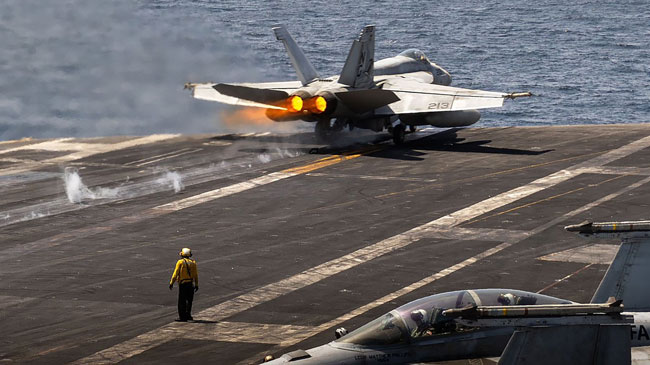
The United States military has launched fresh strikes on targets in southern Iran, according to a statement from US Central Command released early Tuesday morning. The operation, which marks a significant escalation in regional tensions, targeted Iranian missile installations and vessels reportedly attempting to lay mines in strategic waterways.
US Central Command confirmed that American forces struck multiple sites across Iran's southern coastal regions in what officials described as a defensive operation aimed at protecting maritime navigation and US interests in the Persian Gulf. The military action comes amid heightened concerns over Iranian activities in the Strait of Hormuz, a vital chokepoint for global oil shipments.
US Military Strikes Target Iranian Missile Sites
According to the official statement, US forces focused their strikes on Iranian missile launch facilities and command centres located along the southern coastline. Intelligence reports had indicated these sites posed an immediate threat to commercial shipping lanes and allied military assets operating in the region.
Pentagon sources, speaking on condition of anonymity, said the strikes utilised precision-guided munitions launched from naval vessels and aircraft already deployed in the area. The operation was described as limited in scope but designed to deliver a clear message about Washington's commitment to freedom of navigation in international waters.
Iranian Vessels Attempting to Place Mines Destroyed
In addition to fixed missile installations, US forces engaged Iranian naval vessels that Central Command said were actively attempting to deploy naval mines in shipping channels. The small boats, believed to be operated by Iran's Islamic Revolutionary Guard Corps Navy, were reportedly destroyed before they could complete their mining operations.
Naval mines pose a grave risk to both military and civilian vessels transiting the congested waterways of the Persian Gulf. The area handles roughly one-fifth of the world's petroleum traffic, making any disruption to navigation a matter of global economic concern.
The US Central Command, which oversees American military operations across the Middle East, has not yet released casualty figures or detailed battle damage assessments. Iranian officials have not immediately responded to requests for comment on the strikes.
Regional and International Implications
This military action represents the most direct confrontation between US and Iranian forces in recent months, raising questions about potential further escalation. Analysts warn that tit-for-tat strikes could spiral into a broader conflict that would destabilise the entire Gulf region and disrupt global energy markets.
Sri Lankan Interests and Diaspora Concerns
For Sri Lanka, which imports the majority of its petroleum products through the Persian Gulf route, any sustained conflict in the region could have serious economic implications. Oil prices typically surge following military actions in the Middle East, potentially affecting fuel costs and inflation in import-dependent economies like Sri Lanka's.
Additionally, tens of thousands of Sri Lankan expatriate workers are employed across Gulf states, and their safety becomes a paramount concern when regional tensions rise. The Sri Lankan government has not yet issued any travel advisories or evacuation plans, but officials are likely monitoring the situation closely.
Historical Context of US-Iran Tensions
Relations between Washington and Tehran have remained strained for decades, particularly following the US withdrawal from the Iran nuclear agreement in 2018 and the subsequent reimposition of economic sanctions. Iran has repeatedly vowed to resist what it calls American aggression in the region, while the US maintains a significant military presence to counter Iranian influence.
Previous confrontations have included the downing of unmanned aircraft, seizures of oil tankers, and attacks on Saudi oil facilities that Washington attributed to Iranian proxies. The latest strikes suggest neither side is prepared to de-escalate, despite international calls for restraint.
The US Department of Defense is expected to provide additional details during a scheduled press briefing later today. Meanwhile, diplomatic channels remain open, though prospects for immediate dialogue appear limited given the current military posture on both sides.
As the situation continues to develop, regional allies and international observers are watching closely to see whether this latest military action will prompt Iranian retaliation or lead to renewed efforts at diplomatic engagement. The coming days will be critical in determining whether the Gulf moves toward further conflict or pulls back from the brink.
Source: Ada Derana
No comments yet. Be the first to share your thoughts!