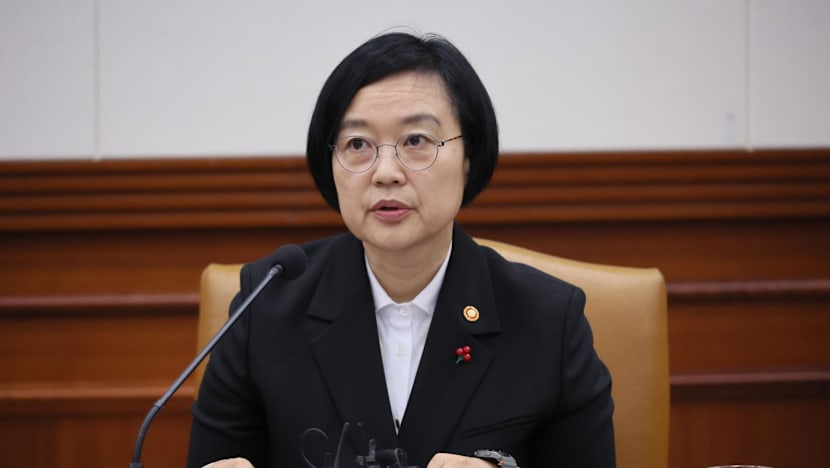
South Korean President Lee Jae Myung has nominated Han Seong-sook, the country's minister for small and midsize businesses and startups, as the nation's next prime minister, marking a historic moment as she becomes the first woman to hold the position in two decades. The presidential office confirmed the appointment on Sunday, signalling a significant shift in the country's political landscape.
Han Seong-sook's nomination breaks a long-standing glass ceiling in South Korean politics, where female representation at the highest levels of government has remained stubbornly low despite the country's economic advancement and democratic maturity. The last woman to serve as prime minister was Han Myeong-sook, who held the office from 2006 to 2007 under then-President Roh Moo-hyun.
A Career Built on Economic Reform
The nominee brings substantial credentials to the role, having built her reputation overseeing policies that support small and medium-sized enterprises—the backbone of South Korea's economy. As minister for SMEs and startups, Han championed initiatives to ease regulatory burdens on entrepreneurs and foster innovation in technology sectors where South Korea competes globally.
Her ministerial tenure coincided with South Korea's push to diversify its economy beyond traditional manufacturing giants like Samsung and Hyundai. Government insiders credit her with streamlining business registration processes and securing increased funding for startup accelerators across Seoul, Busan, and regional hubs.
Political analysts suggest President Lee's choice reflects both pragmatism and political calculation. Han's business-friendly track record appeals to conservative voters and corporate leaders, while her gender addresses mounting criticism from progressive constituencies demanding greater representation for women in government.
Parliamentary Confirmation Ahead
The nomination now moves to South Korea's National Assembly, where Han must face confirmation hearings before assuming office. While the president's party holds a working majority, opposition lawmakers are expected to scrutinise her policies on labour rights and corporate governance during the vetting process.
Kim Young-sun, a political science professor at Seoul National University, told local media that Han's confirmation appears likely but not guaranteed. "Her business background will be examined thoroughly, particularly any connections to corporate interests that might pose conflicts," Kim noted. "However, her track record suggests she can navigate the hearings successfully."
The prime minister's role in South Korea carries significant symbolic weight, though executive power remains concentrated in the presidency. The premier serves as the president's principal deputy and coordinates cabinet ministries, often acting as a buffer between the Blue House and the National Assembly on contentious policy matters.
Gender Equality Remains a Challenge
Despite being Asia's fourth-largest economy and a thriving democracy, South Korea continues to struggle with gender inequality in political and corporate spheres. Women hold fewer than 20 per cent of parliamentary seats, and female representation in executive positions at major conglomerates remains below regional averages.
Advocacy groups cautiously welcomed the nomination while emphasising that one appointment does not constitute systemic change. Lee Mi-kyung, director of the Korean Women's Association United, said the nomination "sends an important message but must be followed by concrete policies promoting women's advancement across all sectors."
International observers are watching the appointment with interest. UN Women has highlighted South Korea as a test case for how developed Asian nations balance traditional social structures with demands for greater equality in the 21st century.
Regional Implications
Han's potential appointment comes as South Korea navigates complex regional dynamics, including tensions with North Korea and evolving trade relationships with China and the United States. If confirmed, she will inherit a foreign policy portfolio requiring delicate diplomatic balancing, though the president retains primary authority over international affairs.
The nominee's experience in economic policy could prove valuable as South Korea confronts challenges including an ageing population, household debt levels, and competition from Chinese technology firms. Her startup portfolio suggests familiarity with the innovation ecosystems that Seoul hopes will drive future growth.
Confirmation hearings are expected to begin within the coming fortnight, with a final vote anticipated before the National Assembly's summer recess. If successful, Han Seong-sook will take office at a pivotal moment for South Korea's domestic and international agenda.
Source: Daily Mirror
No comments yet. Be the first to share your thoughts!