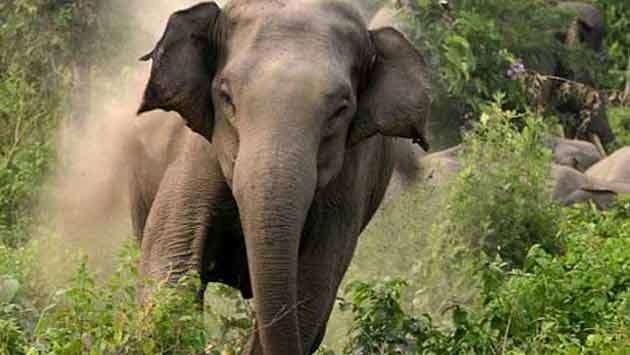
A 72-year-old man was killed after being attacked by a wild elephant in the Sumedhankara area within the Serunuwara Police Division yesterday (11 June), marking yet another tragic incident in Sri Lanka's escalating human-elephant conflict. The elderly victim succumbed to injuries sustained during the encounter, authorities confirmed.
The fatal elephant attack occurred in a rural pocket of the district where wildlife corridors increasingly intersect with human settlements. Police from the Serunuwara Division arrived at the scene following reports of the incident and coordinated with wildlife officials to secure the area.
Rising Toll of Human-Elephant Conflict
This latest fatality underscores the deadly reality facing communities across Sri Lanka's rural heartlands. According to the Department of Wildlife Conservation, human-elephant conflict claims approximately 70 to 80 human lives annually, while around 250 elephants die each year from retaliatory killings, accidents, and electrocution.
The island nation is home to an estimated 6,000 to 7,500 wild elephants, whose natural habitats have shrunk drastically due to agricultural expansion, infrastructure development, and deforestation. Elephants often venture into villages in search of food and water, particularly during dry seasons when forest resources dwindle.
Sumedhankara, like many rural localities bordering forested areas, has witnessed repeated encounters between elephants and residents. Farmers cultivating paddy fields and home gardens frequently find their crops destroyed overnight, leading some to resort to dangerous deterrent methods that can provoke aggressive responses from elephants.
Community Safety Measures and Government Response
Local authorities have urged residents in affected areas to exercise extreme caution, especially during early morning and evening hours when elephant movement peaks. The Wildlife Department has deployed teams to monitor elephant herds and install electric fences in vulnerable zones, though funding and logistical constraints often hamper these efforts.
Wildlife experts emphasize that elephants are generally not aggressive unless threatened or startled. However, elderly individuals and those working alone in fields face heightened risk, particularly when encountering lone bull elephants or mothers with calves.
The government has implemented various mitigation strategies, including the establishment of elephant corridors, translocation programmes, and community awareness campaigns. Yet conservationists argue that these measures remain insufficient given the scale of habitat fragmentation.
The Need for Sustainable Solutions
Environmental groups advocate for a more holistic approach that balances human safety with elephant conservation. This includes creating buffer zones, restoring degraded forest corridors, and providing compensation schemes for affected farmers to reduce retaliatory killings.
A 2024 study by the International Union for Conservation of Nature identified Sri Lanka's human-elephant conflict as one of the most severe in Asia, requiring urgent policy intervention and international support.
The Serunuwara Police have registered the case and are conducting further investigations into the circumstances surrounding yesterday's attack. The victim's family has been notified, and community leaders have called for enhanced protective measures in the area.
A Persistent Challenge for Rural Communities
For decades, Sri Lankan villagers have lived alongside elephants, developing traditional knowledge and cultural reverence for the species. Yet rapid development and population growth have eroded these coexistence patterns, transforming occasional encounters into frequent, often fatal confrontations.
Agricultural communities particularly suffer economic losses running into millions of rupees annually. Destroyed crops, damaged property, and the psychological toll of living under constant threat have prompted some families to abandon their ancestral lands altogether.
Wildlife officials stress that long-term solutions must involve collaboration between government agencies, conservation organizations, and local communities. Early warning systems using technology such as SMS alerts and solar-powered fences have shown promise in pilot projects across the country.
As Sri Lanka grapples with this conservation crisis, yesterday's tragedy in Sumedhankara serves as a sobering reminder that protecting both human lives and endangered wildlife requires urgent, sustained action. The World Wildlife Fund and local partners continue to advocate for integrated land-use planning that prioritizes coexistence over confrontation.
Residents in elephant-prone areas are advised to remain vigilant, avoid travelling alone in forested zones, and report elephant sightings to authorities immediately.
Source: Daily Mirror
No comments yet. Be the first to share your thoughts!