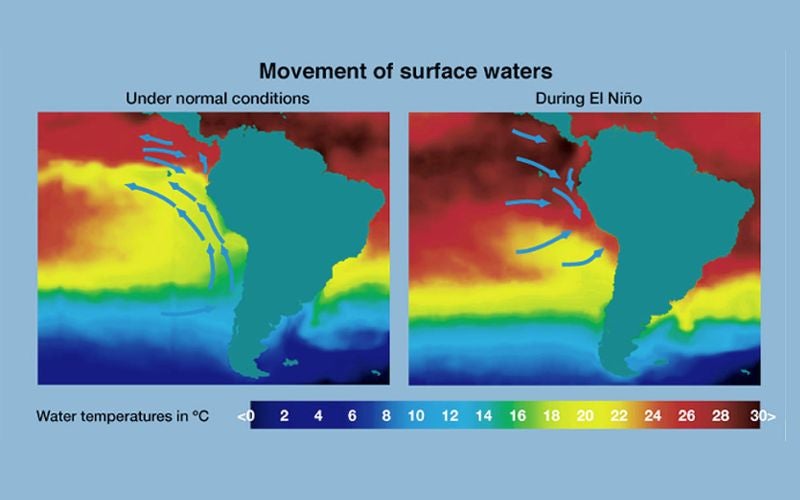
El Niño, the powerful natural Pacific weather pattern known for pushing global temperatures to record highs, has officially begun, according to US scientists. The announcement, made in June 2026, signals the potential for significant weather disruptions across the globe, including intensified droughts, flooding, and heat waves that could affect millions of people from Asia to the Americas.
The National Oceanic and Atmospheric Administration (NOAA) confirmed the onset of El Niño conditions after monitoring sea surface temperatures in the equatorial Pacific Ocean. The pattern, which occurs irregularly every two to seven years, is characterised by warmer-than-average ocean temperatures that fundamentally alter atmospheric circulation patterns worldwide.
Understanding El Niño's Global Impact
El Niño events have historically brought dramatic shifts in weather conditions across continents. During previous occurrences, countries in Southeast Asia, including Sri Lanka, have experienced altered monsoon patterns that affected agricultural productivity and water resources. The phenomenon typically suppresses rainfall in some regions whilst triggering excessive precipitation in others.
Scientists warn that this El Niño event arrives at a particularly concerning time, as global temperatures have already been trending upward due to climate change. When combined with the natural warming effect of El Niño, the world could experience its hottest year on record. Dr Maria Chen, a climate scientist at NOAA, noted that the dual impact of human-induced warming and El Niño creates conditions ripe for unprecedented weather extremes.
Implications for Sri Lanka and South Asia
For Sri Lanka, the return of El Niño raises particular concerns about the southwest and northeast monsoons, which are critical for the island's agriculture and hydroelectric power generation. Historical data shows that strong El Niño events have coincided with reduced rainfall during crucial growing seasons, leading to crop failures and water shortages.
The 2015-2016 El Niño, one of the strongest on record, brought severe drought conditions to Sri Lanka, forcing authorities to implement water rationing in major cities and causing significant losses for tea and rice farmers. Agricultural experts are now urging the government to prepare contingency plans, including water conservation measures and drought-resistant crop strategies.
Regional Weather Disruptions Expected
Across South Asia, meteorological departments are issuing advisories as they anticipate shifts in traditional weather patterns. India, which relies heavily on monsoon rains for its agricultural output, could see reduced precipitation in some regions whilst others experience flooding. Bangladesh faces heightened risks of both drought in northwestern areas and intensified cyclone activity in coastal zones.
The phenomenon's influence extends far beyond Asia. Australia typically experiences hotter and drier conditions during El Niño years, increasing bushfire risks. South America's western coast often sees devastating floods, whilst eastern Africa may face drought conditions that threaten food security for millions.
Preparing for Weather Extremes
Climate experts emphasise that early warning of El Niño's arrival provides governments and communities with valuable time to prepare. International organisations, including the World Health Organization, are coordinating with national authorities to stockpile resources and establish emergency response protocols.
Sri Lankan authorities have reportedly begun consultations with agricultural and water management departments to develop mitigation strategies. These include promoting efficient irrigation techniques, establishing seed banks with drought-resistant varieties, and reinforcing early warning systems for extreme weather events.
Long-term Climate Concerns
While El Niño is a natural phenomenon that has occurred for millennia, its interaction with human-caused climate change presents new challenges. Scientists note that El Niño events may become more intense and unpredictable as global temperatures continue to rise, making adaptation strategies increasingly critical.
The current El Niño is expected to strengthen through the latter half of 2026 and potentially persist into early 2027. Meteorologists will continue monitoring sea surface temperatures and atmospheric conditions to refine predictions about its strength and duration.
For communities across the tropics and beyond, the message is clear: prepare for potential disruptions to weather patterns, agricultural cycles, and water availability. As this El Niño unfolds, coordination between governments, scientists, and local communities will be essential to minimising its most severe impacts.
Source: Daily Mirror
No comments yet. Be the first to share your thoughts!